
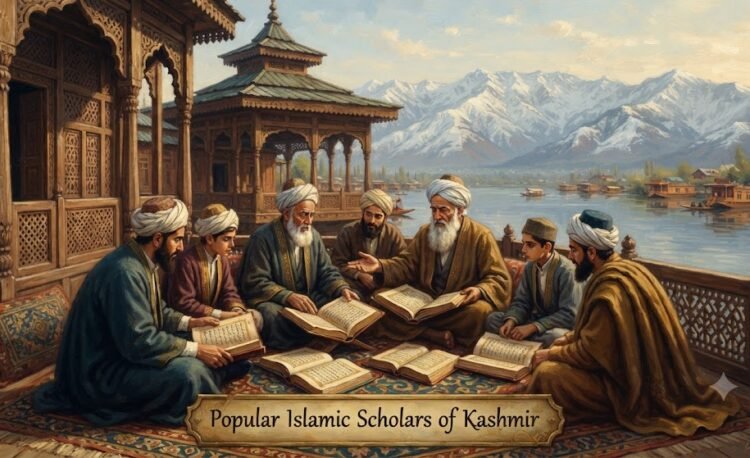
Popular Islamic Scholars of Kashmir: Legends of Faith, Wisdom, and Resilience
Kashmir, historically revered as Peer Vaer (the Alcove of Saints) and poetically celebrated as “Paradise on Earth,” boasts a profound legacy in Islamic scholarship that spans over seven centuries. Nestled within the majestic Himalayas, the valley has long stood as a vibrant cradle of Sufi mysticism, rigorous theological discourse, and deep spiritual enlightenment. Islam’s arrival in the 14th century, catalyzed by Persian missionaries and travelling Sufi masters, transformed the cultural topography of the region.
Renowned Islamic scholars, jurists, and mystics originating from or serving Kashmir have not only shaped the spiritual identity of the local populace but have also profoundly influenced broader Muslim thought, jurisprudence, and philosophy across South Asia and beyond. Their teachings—rooted in spiritual unity, unwavering compassion, classical jurisprudence, and moral resilience against oppression—continue to resonate deeply in contemporary times.
The history of Islamic scholarship in this region is inextricably intertwined with its socio-political fabric. From the early Sufi orders that harmonized indigenous Kashmiri traditions with universal Islamic principles to modern theologians and reformers advocating for educational upliftment and social justice, these scholars successfully bridged the gap between personal spirituality and systemic societal reform. Search queries such as “famous Kashmiri Muslim scholars,” “Sufi saints of Kashmir,” and “prominent Islamic theologians from Jammu and Kashmir” often lead seekers to stories of intellectual brilliance forged amidst geopolitical complexity.
This comprehensive guide delves into the lives, philosophies, and enduring legacies of the most prominent Islamic scholars of Kashmir, uncovering how they fostered a unique Kashmiri Islamic identity anchored in tolerance, devotion, and intellectual rigor.
Part 1: The Foundations of Faith & Early Sufi Pioneers
Islam’s systematic advent in Kashmir is historically credited to visionary missionaries and saints who laid a durable foundation for a flourishing scholarly tradition.
1. Mir Sayyid Ali Hamadani (1314–1385 CE) – Shah-e-Hamadan
-
Legacy & Mission: A towering Persian scholar, poet, and prominent Kubrawi Sufi saint, Mir Sayyid Ali Hamadani is widely celebrated as the principal architect of Islam’s deep roots in the Kashmir Valley. Traveling alongside 700 disciples—comprising scholars, calligraphers, and master artisans—he revolutionized not only the spiritual domain but also the socio-economic framework of the valley by introducing advanced arts and crafts like shawl weaving and papier-mâché.
-
Scholarly Contribution: His seminal work, Zakhirat-ul-Muluk, remains a timeless treatise on Islamic governance, ethics, and the duties of a ruler toward society. His influence permanently welded spiritual devotion with industrious craftsmanship in the Kashmiri ethos.
2. Sheikh Noor-ud-din Noorani (1377–1438 CE) – Nund Rishi / Sheikh-ul-Alam
-
Origin & Background: Born in 1377 CE in the village of Qaimoh in the Kulgam district, Sheikh Noor-ud-din Noorani is universally revered as the patron saint of Kashmir (Alam-e-Kashheer).
-
Philosophy & Impact: Nund Rishi’s life exemplifies the seamless fusion of orthodox Islamic mysticism with the native Kashmiri ethos. Wandering across the valleys, he composed thousands of Shruks (poetic verses) in the local Kashmiri language that preached radical monotheism, human equality, and profound environmental consciousness. He founded the Rishi Order, an indigenous Sufi tradition that championed simplicity, pacifism, and deep reverence for nature, leaving an indelible mark on both Muslim and Hindu traditions in the region.
Part 2: Titans of Hadith, Jurisprudence, and Translation
As centuries progressed, Kashmiri scholarship evolved to produce world-class authorities in classical Islamic sciences, textual analysis, and scriptural accessibility.
3. Maulana Anwar Shah Kashmiri (1875–1933) – The Hadith Mastermind
-
Legacy: Born in the remote village of Dudwan in the Kupwara district, Allama Anwar Shah Kashmiri stands as an absolute titan of Islamic jurisprudence and Prophetic traditions. Hailed by contemporaries and visionary poets like Sir Muhammad Iqbal as “the greatest Islamic scholar produced by the subcontinent in centuries,” his command over Hadith was legendary.
-
Contributions: Orphaned at a young age, he memorized the Quran early and pursued advanced studies at Darul Uloom Deoband, where he later served as Sheikh al-Hadith and Principal. His monumental work, Fayz al-Bari (a comprehensive commentary on Sahih al-Bukhari), revolutionized advanced seminary studies globally, cementing Kashmir’s status in high-level Islamic academia.
4. Maulana Mohammad Yousuf Shah (1894–1968) – Muhajir-e-Millat
-
Role & Impact: A prominent religious and socio-political scholar from Srinagar who assumed the mantle of Mirwaiz of Kashmir in 1931. Recognizing that language barriers hindered common people from deeply engaging with divine text, he undertook the monumental task of translating and interpreting the Holy Quran directly into the Kashmiri language. His scholarly efforts democratized religious education, making scripture accessible to the common masses for the first time.
Part 3: Contemporary Reformers, Activists, and Modern Leaders
Navigating the complexities of the 20th and 21st centuries, contemporary scholars have focused heavily on community welfare, institutional education, and spiritual guidance.
5. Maulana Ghulam Rasool Hami – Contemporary Sufi Reformer
-
Role & Vision: As the founder-patron of Karwan-i-Islami International, Maulana Ghulam Rasool Hami represents a dynamic bridge between traditional Sufi scholarship and modern social activism.
-
Community Impact: Focusing intensely on grassroots reform, his organization manages a network of modern educational institutions, madrasas, and orphanages across J&K. He is an outspoken advocate for interfaith dialogue, women’s education, and aggressive grassroots campaigns against drug addiction and social evils.
6. Maulana Syed Ali Shah Geelani (1929–2021)
-
Background & Influence: Hailing from Sopore, Syed Ali Shah Geelani was a dominant religious and political figure associated with Jamaat-e-Islami. Authoring over 30 books focusing on Islamic ideology, socio-political rights, and moral resilience, his writings and lifetime of activism shaped generations of political discourse in the valley.
7. Maulana Mirwaiz Umar Farooq (born 1973) – The Modern Bridge of Dialogue
-
Legacy: Inheriting the historic pulpit of Jama Masjid in Srinagar following a tragic family lineage, Mirwaiz Umar Farooq represents a contemporary, moderate voice in Kashmiri religious leadership. Educated locally and internationally, his weekly sermons consistently emphasize Islamic moderation, human rights education, communal harmony, and peaceful reconciliation.
8. Aga Syed Mohammad Hadi Almoosvi – Shia Scholar and Social Reformer
-
Background: A distinguished contemporary Shia Islamic scholar from Budgam district, Aga Syed Mohammad Hadi is the successor to a rich lineage of spiritual leadership. After pursuing advanced Islamic jurisprudence in Iran for eight years, he returned to lead the Anjuman-e-Sharie Shiayan in Budgam.
-
Contributions: Widely respected by youth for his focus on educational upliftment, anti-injustice teachings rooted in the paradigm of Karbala, and relentless advocacy for communal peace, he was honored with the Global Leader Award for his contributions to social harmony and community welfare.
Part 4: Other Notable Historical and Regional Scholars
To fully appreciate the vast intellectual tapestry of Kashmir, several other luminaries deserve recognition:
-
Aga Syed Yusuf (1904–1982): A visionary Shia leader who laid the foundation for modern community education and institutional organization through Anjuman-e-Sharie.
-
Mufti Nazir Ahmad Qasmi: A contemporary jurist renowned for authoritative legal opinions (Fatawa) and rigorous community guidance.
-
Maulana Abul Hassan Ali Nadwi (1914–1999): Though hailing from outside Kashmir, his frequent visits and profound writings deeply inspired local scholarly circles and reinforced ties with broader pan-Islamic reform movements.
The Enduring Impact of Kashmiri Islamic Scholarship
The legacy left behind by the Islamic scholars, Sufis, and reformers of Kashmir goes far beyond written treatises or architectural shrines. They succeeded in forging a resilient spiritual community capable of weathering centuries of political turbulence, foreign rule, and social transition. Their collective teachings—emphasizing the balance between inner purification (Tasawwuf), intellectual inquiry, and active social compassion—provide an essential moral compass for the modern world.
As global interest in the rich intellectual history of the Himalayas continues to grow, exploring the lives of these luminaries offers deep insight into a timeless culture dedicated to the pursuit of divine knowledge, human dignity, and enduring peace.